- Introduction
In Brazil and around the world, the pulp and paper industry is undergoing significant change driven by technological advances, sustainability demands and global market dynamics (SUOMO, 2025).
Brazil in particular leads the world ranking of eucalyptus (short-fiber) pulp producers, with about 22.5 million tonnes, and is also a global leader in exports (18.6 million tonnes), making it a significant presence in the global economy (IBÁ, 2026).
Exponential growth is projected over the horizon to 2030. The forestry industry is preparing for a new cycle of capacity expansion, especially in pulp production, which could reach US$ 14.3 billion (R$ 75 billion) through investments in new mills and expansion of existing units (FONTES, 2024). This growth highlights the sector’s resilience and ability to adapt to constantly evolving market demands and technological advances.
Although traditional challenges such as land availability and rising forestry costs remain, one issue is gaining prominence among executives and industry specialists: the growing difficulty of attracting, developing and retaining qualified professionals.
The pulp and paper industry faces a shortage of skilled labor, a problem that must be solved if manufacturers are to operate from a position of advantage in an increasingly competitive and digitalized market.
At the same time, there is the “aging of the workforce”, which is becoming increasingly important for companies’ operational sustainability. This phenomenon, known internationally as the “Silver Tsunami”, refers to the mass retirement of the most experienced generation of workers, resulting in potential losses of tacit knowledge, critical skills and operational capacity. A significant share of the workforce will retire in the next 5 to 10 years, putting decades of operational knowledge at imminent risk (MAJIQ, 2026).
This article explores the impact of the sector’s expansion on the challenge of technical succession and knowledge retention, offering insights into the paths that can be taken.
- The silver tsunami
As we have seen, the pulp and paper industry is experiencing the simultaneous retirement of specialists, causing a significant loss of institutional knowledge, a critical skills gap and increased operational risks for facilities.
This movement has specific impacts on the workforce, such as the loss of knowledge and leadership, operational inefficiency, accelerated digital transformation (with greater adoption of automation and advanced process control) and safety risks (with fewer experienced operators on the shop floor to guide new employees, companies face greater occupational risks).
The great challenge is how to keep this vast body of knowledge from being lost when people retire, since a great deal of practical experience and knowledge is acquired over a career devoted to the process and to problem-solving.
- The need for technical succession
For a long time, mills relied heavily on informal mentoring and hands-on experience. Operators learned by experiencing process situations alongside experienced staff. Knowledge was essentially passed on through observation, problem-solving, repetition and years of exposure to the process.
This model worked when employees stayed in the same role for decades and operational complexity was lower. Today, however, mills face a new reality, marked by high staff turnover and vastly greater operational complexity.
Organizations thus face an accelerated generational transition, in which experienced professionals are retiring before they can be replaced, forcing younger employees to take on major responsibilities early in their careers.
Technical succession does not simply mean replacing people. It means preserving critical skills.
To that end, successful strategies are those that ensure the knowledge of these more experienced specialists about best practices is preserved and successfully integrated with the new skills and perspectives of the younger generation.
- Strategies for workforce sustainability
When specialists retire, it is tacit knowledge that is lost: knowledge that comes from practical, intuitive know-how, from the operator’s perception, from problem-solving, from fine-tuning and from decision-making.
Many mills are rethinking how operational knowledge is captured and accessed. Rather than relying solely on static documentation (explicit knowledge) or on tacit knowledge, organizations now prioritize solutions that provide real-time operational guidance.
Today, mills use four (04) Knowledge Management strategies, covering knowledge capture, knowledge digitalization, knowledge transfer and people management.
Knowledge capture strategies include lessons learned, searchable databases for problem-solving, troubleshooting and standardized operational guidance (operating procedures).
Today’s workforce expects fast, visual and intuitive access to data. This expectation extends to industrial operations. Mills are therefore investing in modernizing and connecting their industrial processes in ways that help centralize operational visibility and simplify decision-making. This forms a knowledge digitalization strategy that includes:
- Integrated manufacturing data;
- Searchable process history;
- Cross-site visibility;
- Standardized workflows;
- Operational dashboards;
- Connected worker environments;
- Real-time production insights.
As a knowledge transfer strategy, short-format (CBT – Computer-Based Training) and continuous training is used. At the same time, to retain operational knowledge, leading mills are bringing experienced operators back into the organization in part-time or consulting roles to help train younger workers and transfer operational knowledge. Some organizations with several units are creating centralized operational support teams that help share problem-solving expertise and best practices across multiple facilities (MAJIQ, 2026).
Mills are moving away from relying solely on the knowledge of their own employees to build much larger information networks. Operators are encouraged to contact colleagues at other facilities regularly to solve problems and exchange operational knowledge in real time. To this end, pulp and paper companies encourage their operators to take an active part in round tables and technical-operational meetings to strengthen this networking.
On the other hand, to help solve this problem, the sector is focusing on recruiting, training and retaining new talent. Companies are implementing apprenticeship programs, improving workforce training and developing strategies to attract younger workers, ensuring a smooth transition and the preservation of expertise in the sector (GHOSH, 2021).
In summary, the table below lists the main risks and the mitigation strategies that have been used.
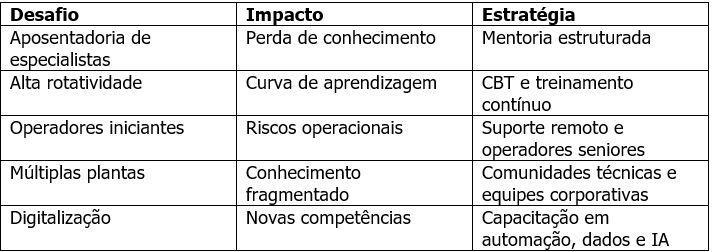
Table 1 – Workforce sustainability strategies (Source: prepared by the author, 2026)
Companies have also sought to map functional competencies. In addition to specialized technical, digital and analytical skills, they have sought to develop “behavioral” competencies such as curiosity and creativity. These competencies are universal and can be transferred from one sector to another with great disruptive impact, replacing traditional thinking and conventional practices with new and innovative ways of working (CARDOSO, 2006).
Workforce sustainability in the pulp and paper industry will depend less on simply replacing professionals and more on organizations’ ability to preserve, share and transform operational knowledge into permanent organizational assets.
- Final considerations
In a scenario of sector expansion, the retirement of experienced professionals can compromise the retention of operational knowledge, safety, efficiency and the continuity of production processes, making it one of the main strategic challenges.
In this context, treating knowledge transfer as part of operational strategy — not just as a workforce initiative — becomes a critical success factor for mills.
It is important to understand that technology can support knowledge transfer, but it cannot replace operational judgment, mentoring and relationships. Companies that manage to create environments in which employees feel connected to the team, supported by leadership and encouraged to learn collaboratively will be more successful.
In short, preserving operational knowledge is not just about systems. It means creating environments where experienced employees can continuously support and develop the next generation of operators. Organizations that manage to integrate people, knowledge and technology will therefore be better prepared to sustain their growth with safety, efficiency and operational excellence.
- References
ABTCP – Guia da ABTCP de Fornecedores & Fabricantes Celulose e Papel 2025/2026. Available at: https://newspulpaper.com/wp-content/uploads/2025/10/GUIA-ABTCP-Fabricantes-e-Fornecedores_compressed.pdf. Accessed: Jun. 11, 2026.
BLACKOUT NEWS – Paper industry on alarm mode – Structural crisis hits sites and employees hard. 24 nov. 2025. Available at: <https://blackout-news.de/en/news/paper-industry-on-alarm-mode-structural-crisis-hits-sites-and-employees-hard/>. Accessed: Jun. 23, 2026.
CARDOSO, G. S. – Mapeamento das competências funcionais: estudo de caso em uma empresa de celulose e papel. 2006. 154 f. Dissertação (Mestrado em Engenharia de Produção) – Universidade Tecnológica Federal do Paraná, Ponta Grossa, 2006. Available at: <http://repositorio.utfpr.edu.br/jspui/handle/1/3580>. Accessed: Jun. 22, 2026.
IBA – Relatório anual de 2025. IBÁ – Industria Brasileira de Árvores. Available at: file:///C:/Users/gilson.cardoso/Downloads/iba_relatorio_digital_por.pdf>. Accessed: Jun. 11, 2026.
FONTES, S. – Pulp projects total $14bn, but workforce is challenge. In. Valor International Business. São Paulo. 31 mai. 2024. Available at: <https://valorinternational.globo.com/business/news/2024/05/31/pulp-projects-total-14bn-but-workforce-is-challenge.ghtml>. Accessed: Jun. 22, 2026.
GHOSH, S.R. – An industry transformed: The pulp and paper worforce reacts to ongoing changes. In: Pulp and Paper Canada. 19 out. 2021. Available at: https://www.pulpandpapercanada.com/an-industry-transformed-the-pulp-and-paper-workforce-reacts-to-ongoing-changes/> Accessed: Jun. 23, 2026.
MAJIQ – The aging workforce is reshaping pulp and paper mill operations. Majiq. 05 Jun. 2026. Available at: https://www.majiq.com/blog/pulp-and-paper-mes-workforce-knowledge-transfer/ . Accessed: Jun. 11, 2026.
SUOMO, O. – Future pulp and paper industry: Navigating trends and opportunities. AFRY, 09 de jan. 2025. Available at: <https://afry.com/en/insight/future-pulp-and-paper-industry-navigating-trends-and-opportunities>. Accessed: Jun. 24, 2026.
TTOBMA – The Pulp and Paper Industry Is Facing a Structural Workforce Deficit. In: TTOBMA News. 09 jun. 2026. Available at: https://www.pulpandpapercanada.com/an-industry-transformed-the-pulp-and-paper-workforce-reacts-to-ongoing-changes/> Accessed: Jun. 19, 2026.
VECTOR SOLUTIONS – Pulp and paper industry trends in 2024: navigating a sustainable and innovative future. Available at: <https://www.vectorsolutions.com/resources/blogs/pulp-and-paper-industry-trends-in-2024-navigating-a-sustainable-and-innovative-future/ >. Accessed: Jun. 23, 2026.