- Introduction
Brazilian eucalyptus pulp (short fiber) plays a major role in the global market, accounting for 11.4% of world production (IBÁ, 2026). In the global ranking of pulp producers, the United States leads with production of 48 million tons, while Brazil ranks second with 25.5 million tons in 2025, of which 22.5 million tons were eucalyptus (short-fiber) pulp.
When it comes to exports, Brazil remains the global leader. A total of 18.6 million tons were exported; of these exports, 43.6% went to China, around 26.7% to Europe and 15.9% to North America (ABTCP, 2025).
Bleached eucalyptus pulps have been widely used to manufacture tissue papers, printing and writing papers, boards, etc., showing that diversity of applications is one of their hallmarks. Printing and writing papers and specialty papers require pulps with high tensile and tear strength, porosity, among other properties. Therefore, the global market demands that major eucalyptus pulp producers improve its physical properties without losing its formation, softness, bulk, smoothness and opacity (PAVAN, 2015; RAMIRES, 2020).
Many factors can influence the quality of the final product. Some can be measured through chemical characterization, while others can be assessed through physical characterization. Most of these characterizations provide information that is useful for predicting the properties and performance of the final product.
The physical properties of pulp depend mainly on the morphological character of the individual fiber and on the interaction between fibers (Figure 1). Fiber length usually has a significant impact on tear strength: tear strength increases as fiber length increases. On the other hand, fiber length has a smaller influence on tensile strength (SHIN & STROMBERG, 2005).
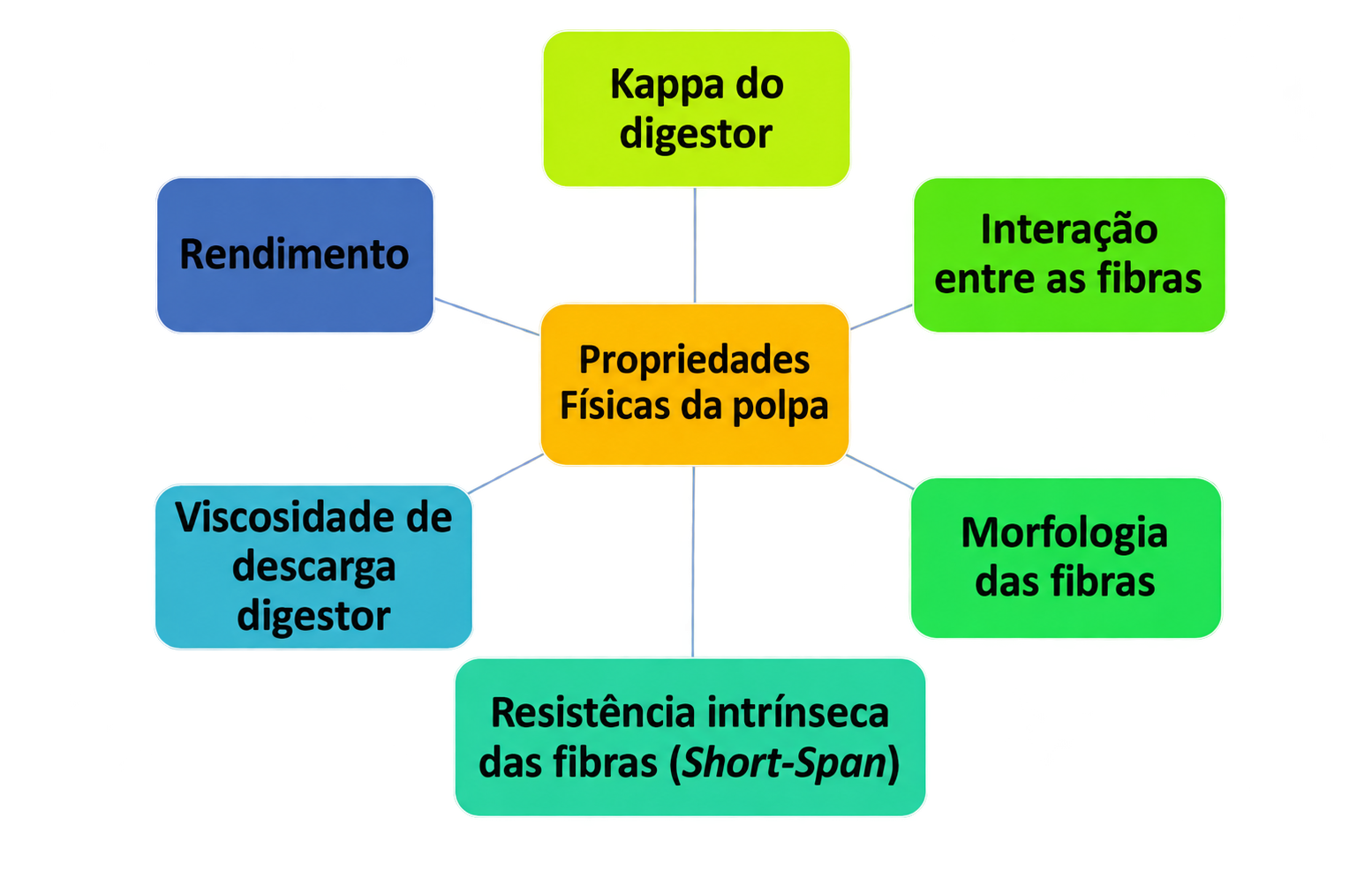 Figure 1 – Factors that affect the physical properties of pulp (Source: prepared by the author, 2021)
In addition to fiber length, fiber coarseness also influences properties. With similar fiber length and strength, fibers with higher coarseness form bulky sheets with high tear strength but low tensile strength (SHIN & STROMBERG, 2005).
The less damage to the fibers, the higher the tensile strength. Fiber damage can be chemical or mechanical. Chemical damage can be inferred from loss of fiber viscosity, while mechanical damage is assessed through morphological changes.
The tensile index of bleached eucalyptus pulp varies significantly depending on clonal management, wood density and refining processes. In South America, bleached eucalyptus pulp reaches a typical tensile index of 65 to 85 N.m/g at common industrial refining levels (Figure 2).
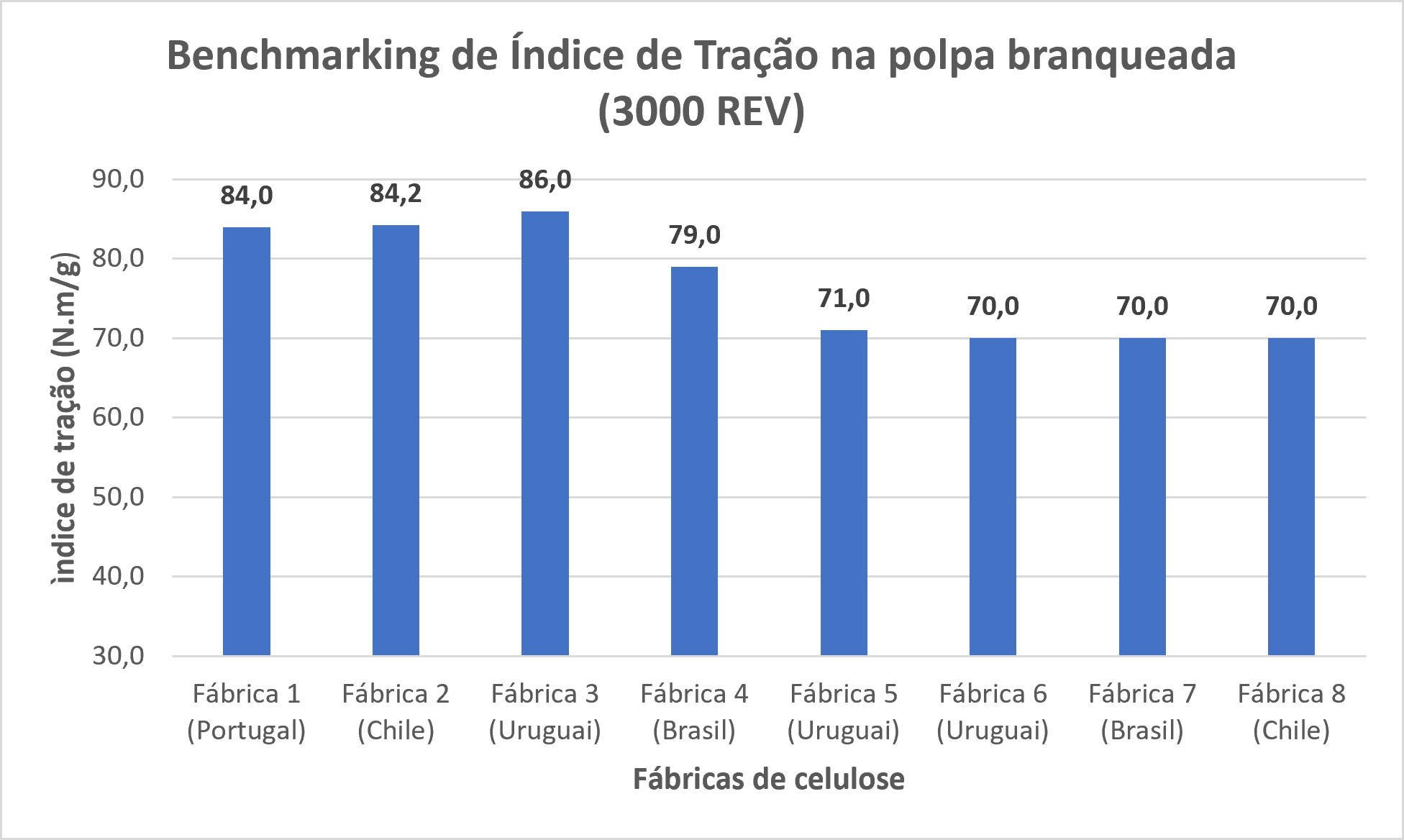 Figure 2 – Tensile index benchmarking for bleached eucalyptus pulp – PFI 3000 rev. (Source: prepared by the author, 2026)
What if we could also improve the mechanical properties of the pulp – while keeping the other existing properties that provide the benefits mentioned above?
The purpose of this article is to assess the impacts of cooking conditions and morphology on physical properties, specifically on the tensile index.
- Impact of cooking conditions
Cooking conditions here refer to those that provide stable and uniform cooking, in which most or all of the chips undergo the same chemical and energy treatment; otherwise, the result will be unstable cooking, which can cause a number of problems, including higher reject levels, lower yield, bleaching problems, poor pulp quality, etc. (Figure 3).
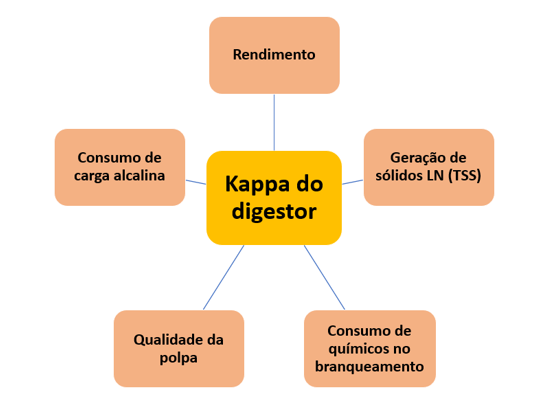 Figure 3 – Influences of the digester blow-line Kappa number (Source: prepared by the author, 2026)
A very common problem for pulp producers is supplying uniform, high-quality pulp that minimizes variations and additional problems during subsequent operations (such as bleaching chemical dosing) or runnability problems on pulp and paper machines.
In light of the above, how do the main bleached eucalyptus pulp producers compare in terms of Kappa at the digester outlet (Figure 4)?
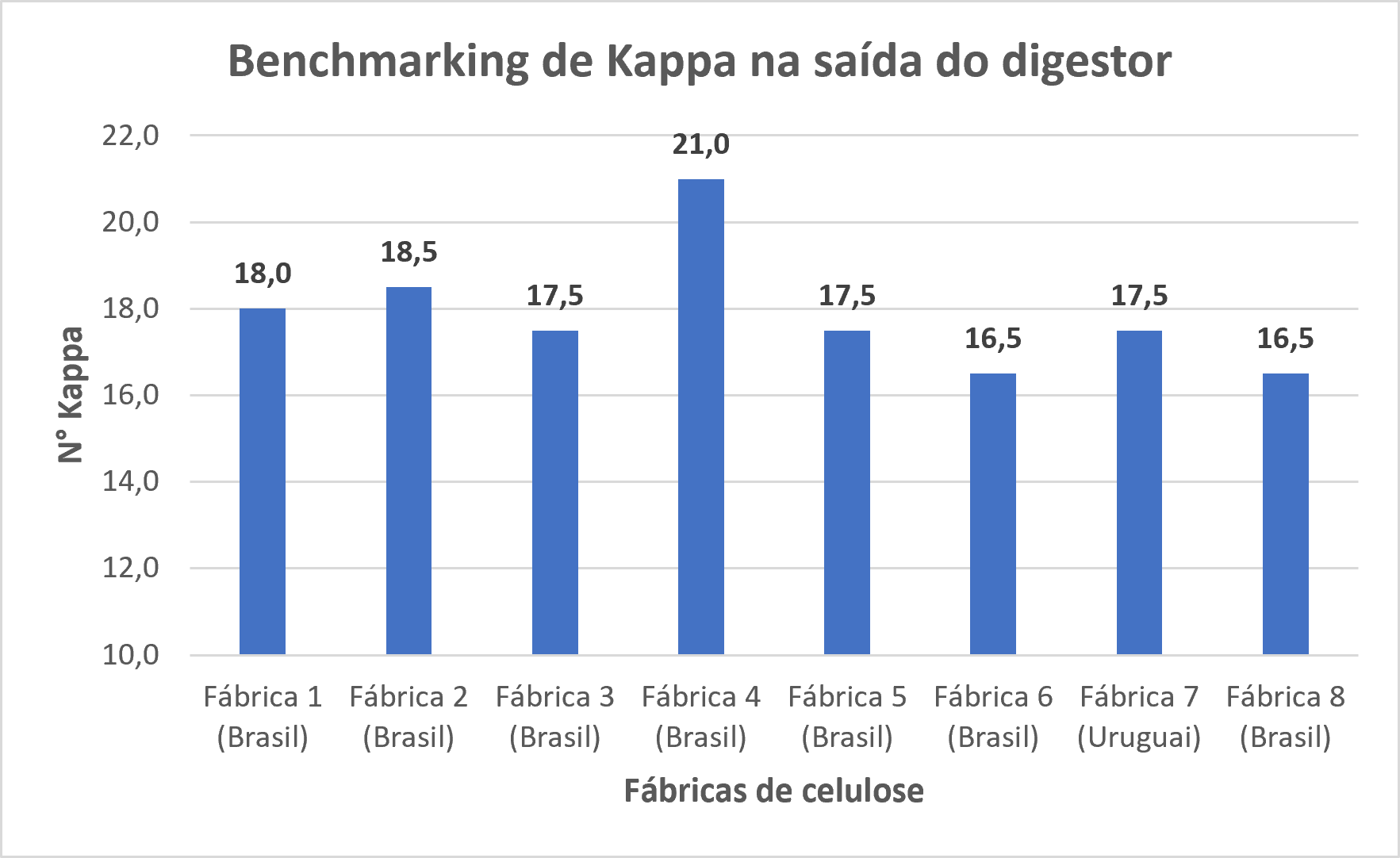 Figure 4 – Benchmarking of Kappa at the digester blow line (Source: prepared by the author, 2021)
When the blow-line Kappa of the main bleached eucalyptus pulp producers is compared, there is a predominant cluster between 17.5 and 18.5, showing a technical and economic balance between yield and chemical load in bleaching.
Two distinct strategies can also be observed. One uses low Kappa (≤ 17.0), focusing on reducing bleaching costs and the downstream environmental load, with risks of yield loss and higher chemical consumption in cooking.
The other, with high Kappa (≥ 18.5), focuses on maximizing wood yield, but with risks of higher bleaching costs and greater potential for increased chemical/environmental load.
Although industrial data show different operating strategies for the Kappa number, it is necessary to understand how these differences actually affect the physical properties of the pulp. Several studies have investigated this relationship, as discussed below.
2.1 Effect of Kappa on tensile strength
According to studies by Shin & Stromberg (2005) on eucalyptus pulps, unbleached pulps with Kappa 13.9 and 17.6 showed a similar tensile index, meaning that variation in cooking conditions does not affect the tensile index of unbleached pulp. On the other hand, they found that the tensile index of bleached pulp is significantly affected by cooking conditions.
A decrease in Kappa number from 17.6 to 13.9 during cooking reduces the tensile index of bleached pulp by 14%, from 101 to 87 N.m/g. Clearly, pulps with a lower Kappa number (13.9) lose more tensile strength during bleaching than pulps with a slightly higher Kappa (17.6).
Segura et al. (2016) also observed similar behavior in unbleached eucalyptus pulps with Kappa 15 and 18, which showed similar tensile indexes at the same refining level and drainability, meaning that variation in cooking conditions does not affect the tensile index of unbleached pulp.
This confirms that the influence of Kappa variation on the tensile index of bleached pulps is significant. Process conditions that allow higher Kappa values show higher viscosity and, consequently, higher tensile strength.
2.2 Effect of yield and viscosity on tensile strength
Another point worth highlighting is the linear correlation between unbleached pulp yield and the tensile index of bleached pulp. Shin & Stromberg (2005) found that increasing unbleached pulp yield from 41% to 43% raises the tensile index of bleached pulp from 86 to 101 N.m/g. According to Jian Li (1999), when yield drops, the impact is greater on fiber wall thickness than on fiber length.
Pulp viscosity is an indicator of fiber strength in the tensile index. It significantly affects the tensile index, especially that of bleached pulp. This clearly indicates that a drop in viscosity below a certain level significantly affects tensile strength due to the loss of fiber strength.
2.3 Effect of alkali charge
Total cooking alkali charge has a significant effect on tensile strength. Shin & Stromberg (2005) applied three different alkali charge levels while keeping the cooking temperature at 145°C and the H-factor at 680. They found that increasing white liquor charges reduced the tensile strength of bleached pulp. This result clearly indicates that higher tensile strength in bleached pulp can be obtained by reducing the white liquor charge.
Bräanvall (2007) varied the alkali charge and assessed the impact on tensile indexes. He concluded that pulp produced with a low sodium ion concentration was able to form stronger fiber-to-fiber bonds, since the tensile index was higher for a given sheet density.
2.4 Effect of residual alkali concentration
One notable aspect was the effect of the residual alkali concentration of black liquor at the end of the lower cooking zone (at the end of bulk delignification), i.e. at CD3 (lower extraction screen), which shows a good correlation with pulp yield. Pulp yield increases as the residual alkali concentration of the black liquor decreases, regardless of the cooking temperature.
Thus, an increase in residual alkali concentration at CD3 results in lower tensile strength of the bleached pulp.
2.5 Effect of fiber morphology on the physical properties of pulp
When it comes to the influence of fiber morphology on the physical properties of pulp, everyone agrees that it has a significant impact. However, it is somewhat difficult to quantify this impact across the various process stages on a routine basis, particularly chemical and mechanical damage.
Among fiber dimensions, fiber length is affected by 2% to 6% depending on Kappa variation. The main effect is a significant reduction in cell wall thickness and a proportional reduction in fiber width. More drastic cooking reduces fiber coarseness (SHIN & STROMBERG, 2005).
- Final considerations
As shown above, the physical properties of fibers are affected by Kappa, yield, viscosity, alkali charge, residual alkali, etc.
The results analyzed indicate that obtaining bleached eucalyptus pulps with a high tensile index depends less on the Kappa number alone and more on preserving fiber integrity throughout cooking. Strategies that maximize yield, viscosity and digester operating stability tend to result in pulps with better physical performance after bleaching.
For mills that want to produce a bleached pulp with a higher tensile index, the following is recommended:
- Kappa at the digester outlet ≥ 16 (*the recommended minimum value of 16 is an operating limit below which the risks of viscosity and strength loss increase. If there is an opportunity to improve machine performance, aim for a higher Kappa);
- Viscosity at the digester outlet ≥ 1250 dm³/kg;
- Top alkali charge = 12 to 12.5%;
- Total alkali charge ≤ 18.5% (*with a wood supply showing little age variation);
- CD3 residual EA as close as possible to 6 g/L.
The following actions are also recommended to increase process stability and reduce variability:
- Advanced controls to stabilize Kappa in the digester (level, residuals and cooking circulation control);
- Online Kappa prediction and monitoring;
- Mapping of pulp strength losses (strength delivery) along the eucalyptus fiber line.
- References
ABTCP – Guia da ABTCP de Fornecedores & Fabricantes Celulose e Papel 2025/2026. Available at: https://newspulpaper.com/wp-content/uploads/2025/10/GUIA-ABTCP-Fabricantes-e-Fornecedores_compressed.pdf. Accessed on: Jun 11, 2026.
BRÄANVALL, E.- The limits of delignification in Kraft cooking. In.: BioResources, vol.9, n°3, p. 2081-2107, 2017.
IBA – Relatório anual de 2025. IBÁ – Indústria Brasileira de Árvores. Accessed on: Jun 11, 2026.
LI, J. – How much should the yield of softwood chemical pulp (kraft pulp) be improved? Limitations from physical strength. IPST, Project F030, Atlanta, 1999.
PAVAN, P. C. – The role of BEKP strength on its market share. In: 7th ICEP – International Colloquium of Eucalyptus Pulp. May 26-29, 2015. Vitória. Available at: https://www.eucalyptus.com.br/artigos/outros/12.1.Paulo+Pavan.SLIDES.pdf. Accessed on: Jun 15, 2026.
RAMIRES, H. – Eucalyptus – adding tensile strength and keeping formation and softness. In: Tissue World. December 3, 2020. Available at: https://www.tissueworldmagazine.com/special-features/focus-on/eucalyptus-adding-tensile-strength-and-keeping-formation-and-softness. Accessed on: Jun 15, 2026.
SEGURA et al. – Effect of Kappa Number Variation on Modified Pulping of Eucalyptus. In.: Bioresources, vol.11, n°4, p. 9842-9855, 2016.
SHIN, N. H.; STROMBERG, B. – Impact of cooking conditions on physical strength of eucalyptus pulp. In.; Second International Colloquium on Eucalyptus Kraft Pulp, September 4 and 5, 2005, Chile.